Based on the Physician Fee Schedule Proposed Rule as of July 14, 2026
Reimbursement
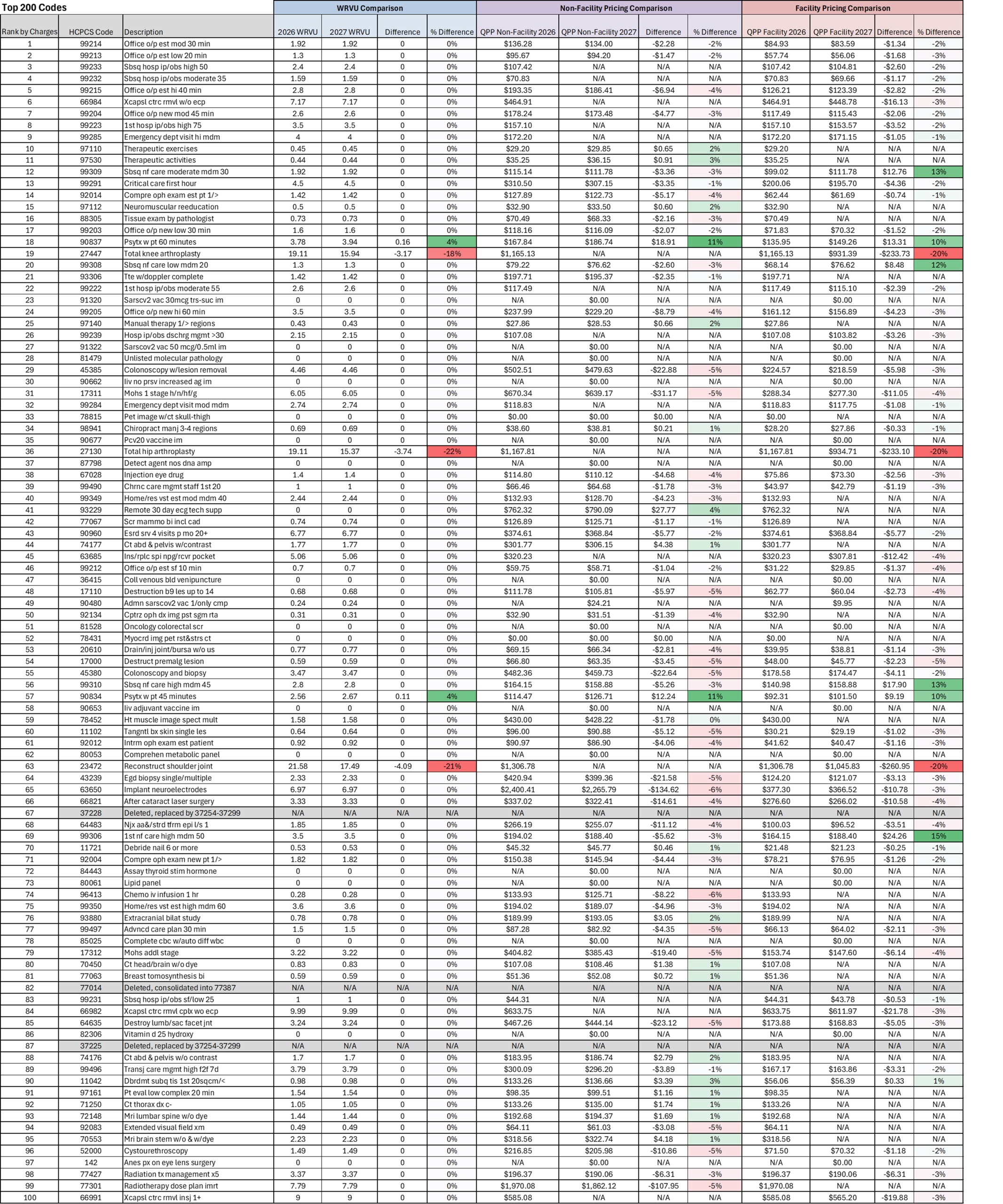
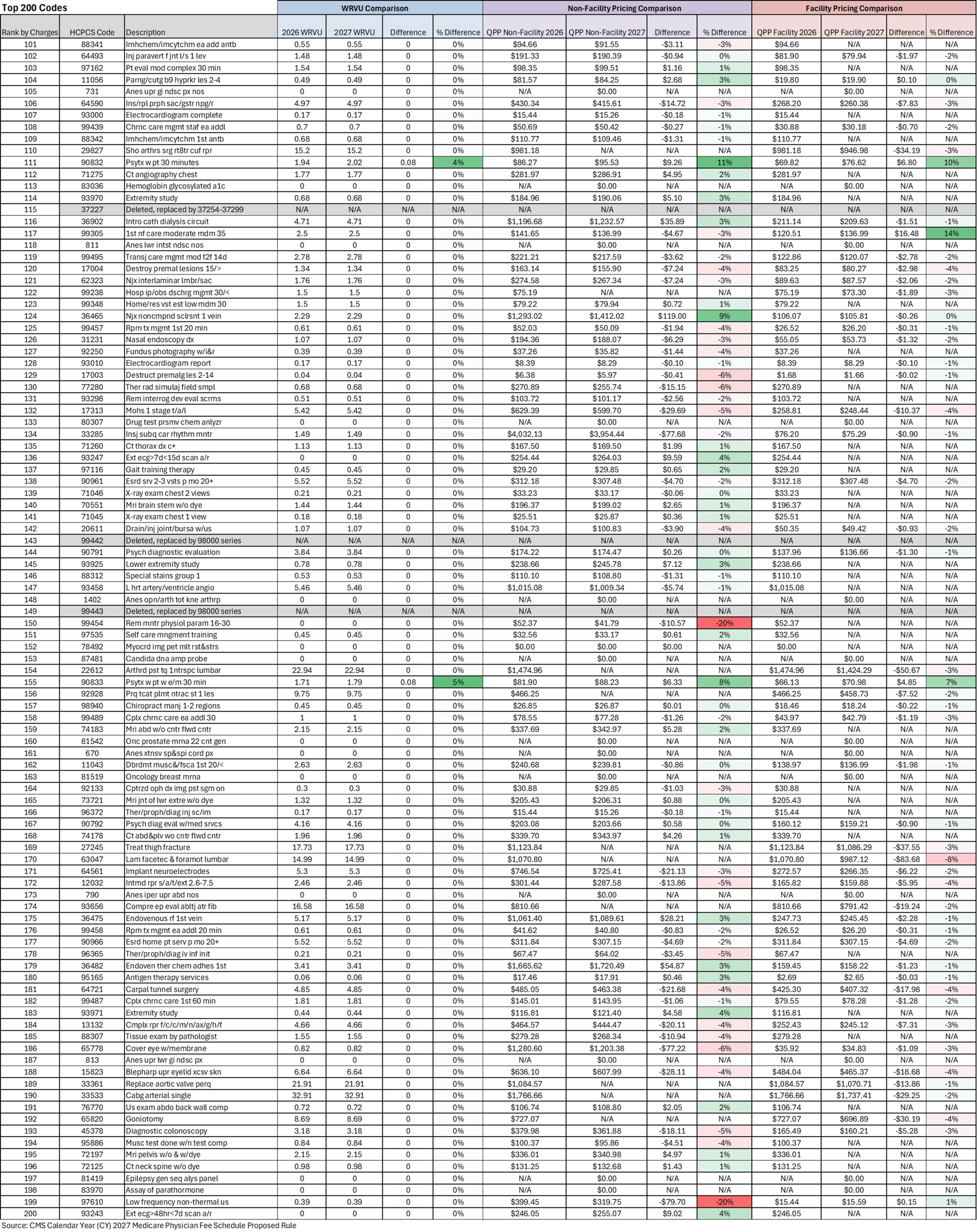
In 2026, CMS implemented separate conversion factors for qualifying APM participants (QPs) and for non-QPs. For 2027, CMS proposes to continue this methodology and has proposed a conversion factor of $33.17 for QPs and $32.84 for non-QPs. This represents a reduction of 1.19% for QPs and 1.68% for Non-QPs.
E/M Visit Complexity Modifier
CMS has proposed a transition of CPT G2211 (add-on code) to a modifier that can be appended to the associated E/M base code. This modifier would increase payment for the associated E/M service by 16%, rather than a flat dollar amount, thereby providing a consistent percentage increase across eligible E/M service levels. CMS is also proposing to recognize additional resource costs incurred by practitioners participating in Accountable Care Organizations (ACOs) when providing longitudinal care, including accountability for total cost of care and quality reporting. Practitioners participating in a Shared Savings Program ACO or Long-term Enhanced ACO Design (LEAD) Model ACO would be eligible for a 32% payment increase on qualifying E/M visits.
Practice Expense Methodology
CMS is proposing to modernize how Medicare calculates PE (practice expense) payments for physicians by relying less on AMA survey data and relying more on updated cost information. CMS will continue to calculate PE RVUs using Work RVUs (wRVUs) and expense inputs but eliminate the final adjustment that forces PE RVUs to align with historical specialty spending patterns and replace that adjustment with a PE stabilizer to limit large year-to-year payment swings during the transition. CMS believes that this method better reflects the actual costs of providing care, while using safeguards to prevent major payment disruptions during the transition. CMS projects that the revised methodology will redistribute payments across specialties, resulting in payment increases for cognitive and behavioral health services and payment decreases for many office-based procedural specialties.
Remote Patient Monitoring
CMS is proposing several key changes to Remote Physiologic Monitoring (RPM) and Remote Therapeutic Monitoring (RTM) services to improve oversight and ensure payments reflect current practice costs. CMS is proposing several changes to remote monitoring services, including restricting RTM to patients with an existing provider relationship, requiring an initial visit to establish medical necessity before services begin, and limiting Medicare reimbursement to services performed by practice-employed clinical staff rather than outside contractors. In addition, CMS would update payment rates to better reflect current device costs and market conditions. While CMS is proposing these requirements to strengthen accountability for RPM and RTM services, the agency is also seeking feedback on broader coding and payment reforms, including potential simplification of the current code structure.
MIPS Transition
CMS is proposing to phase out traditional MIPS reporting by 2029 and transition clinicians to MIPS Value Pathways (MVPs), a more streamlined and specialty-focused reporting approach. The proposal would also introduce new core quality measures and is part of CMS’s broader effort to simplify reporting requirements while strengthening the link between Medicare payment and value-based care. CMS is accepting public comments through September 14, 2026. Following review of submitted comments, CMS is expected to publish a final rule later in 2026 that would generally become effective January 1, 2027.
Global Procedures
CMS is proposing changes to same-day billing when an evaluation and management (E/M) visit is furnished on the same day as a procedure with a global period. CMS’s proposal is expected to primarily affect claims billed with Modifier -25 (significant, separately identifiable E/M service on the same day as a procedure) and Modifier -57 (decision for surgery), because these modifiers are commonly used when E/M services are reported separately from procedures with global periods. Under the proposal, the highest-valued service would be paid at 100% of the Medicare Physician Fee Schedule rate, while payment for any additional same-day services would be reduced to 50%, with the goal of reducing overlapping payment for related services. If finalized, this policy would reduce reimbursement for many same-day E/M visits billed with global procedures. Although the underlying wRVUs assigned to the E/M code would not change, the payment reduction could decrease reimbursement for the E/M service and, depending on a physician organization’s compensation methodology, could result in lower productivity credit or wRVU-equivalent compensation.
Advance Care Planning (ACP) Codes
CMS is proposing two new HCPCS codes to separately describe ACP services performed by clinical staff under a physician’s direct supervision. Existing ACP codes 99497/99498 would be reserved for time personally spent by the billing practitioner.
Ambulatory Specialty Model
CMS is proposing technical and operational refinements to the Ambulatory Specialty Model (ASM), a mandatory specialty-focused value-based payment model for focused on heart failure episodes and low back pain, beginning January 1, 2027. One proposed change would add rural bonus points to participants’ final scores. The changes do not alter ASM’s mandatory scope; in-scope physicians (generally those with a “cardiology” specialty designation, with limited exceptions) continue to face a quality/cost-based payment adjustment. Physicians and specialty groups should monitor future rulemaking, as CMS continues to signal intent to expand specialty-based value-based arrangements.
Shared Medical Appointments (SMAs)
CMS is proposing new coding and payment for shared medical appointments. These are group visits for beneficiaries with similar chronic conditions (e.g., diabetes, hypertension). Sessions would run 60 minutes, capped at 10 beneficiaries, available in-person or via telehealth, and limited to beneficiaries with a prior relationship (within 12 months) with the billing physician or another same-specialty clinician in the same practice.
MSSP/ACO Reforms
CMS is proposing several changes to the Medicare Shared Savings Program (MSSP) intended to strengthen participation in accountable care models and improve long-term financial stability for participating organizations. The proposed changes include revisions to payment methodologies and benchmarking approaches that have been longstanding areas of concern for ACO participants, including the revised G2211 methodology (as described above).
Collectively, these proposals continue CMS’s broader effort to encourage migration from traditional fee-for-service reimbursement toward value-based payment models that reward providers for improving quality outcomes, reducing avoidable utilization, and managing total cost of care. Organizations currently evaluating participation in ACOs may see increasing financial advantages associated with value-based care participation.
Impact to Select Specialties
Specialty impact estimates represent CMS national projections based on average Medicare utilization patterns and may vary significantly by organization, geographic market, payer mix, and physician practice profile. These specialty-level projections are based on CMS modeling and do not include the potential impact of commercial payer contracts, local market dynamics, organizational compensation methodologies, or future modifications that may occur in the final rule.
The CMS proposed rule for 2027 is expected to negatively affect the following specialties:
- CMS’s specialty impact tables project average payment decreases of approximately 9% for Dermatology and Otolaryngology. This is due not only to physician fee schedule conversion factor reductions, but also proposed changes to practice expense calculations to reduce reimbursement for many office-based procedural services that these specialties rely on.
- Orthopedic surgery is projected to see a 7% payment decrease, while Hand Surgery could see about a 5% decrease, largely because CMS is reducing reimbursement of many procedure-based outpatient services. CMS is proposing revisions to the work RVUs for several total joint arthroplasty procedures, including total hip, total knee, and total shoulder arthroplasty. If finalized, these changes could contribute to meaningful reimbursement reductions and may also affect physician compensation in organizations that rely on Medicare-based wRVU valuation or specialty-specific productivity benchmarks.
Also on the horizon for Orthopedics is the Comprehensive Care for Joint Replacement Expanded (CJR-X) model which is being finalized under CMS’s FY 2027 Hospital Inpatient Prospective Payment System (IPPS) final rule (but it will not take effect until January 1, 2028). CJR-X is a mandatory bundled payment model designed to improve care coordination and cost control for patients undergoing hip, knee, and ankle replacements (lower extremity joint replacements) in both inpatient and hospital outpatient settings.
The CMS proposed rule for 2027 is expected to positively affect the following specialties:
- CMS is proposing to increase the wRVU values of multiple CPTs that are commonly used among Behavioral Health and Psychiatry providers. Clinical Social Work is projected to see a 12% payment increase, while Clinical Psychology is projected to see an 11% payment increase. This aligns with previously stated goals of directing more reimbursement toward behavioral health, preventive care, and longitudinal patient management. The proposed rule also provides additional payment opportunities through enhanced psychotherapy services, care coordination, and participation in accountable care models.
- Geriatrics and Diagnostic Testing Facilities are projected to see a 4% payment increase because the proposed rule shifts reimbursement toward preventive, coordinated, and value-based care services rather than procedure-heavy specialties.
Compensation Considerations
Organizations utilizing compensation methodologies based on collections, net professional revenue, Medicare reimbursement, or wRVU productivity should closely model the potential impact of these changes. While many of the proposed policies do not directly modify wRVUs, reductions in reimbursement for procedural services and same-day E/M billing may create discrepancies between physician productivity and compensation outcomes, depending on the design of the organization’s compensation plan. Special attention should be given to specialties heavily dependent on office-based procedures, as reimbursement reductions may outpace changes in measured physician productivity.
To learn more about these changes or find out more about your organization, please contact our experts today.
Anthony Long • (214) 803-3329 • ALong@AskPHC.com
Jason Baldwin • (303) 520-2654 • JBaldwin@AskPHC.com